

Our Lesson Approach
Our lessons at Discovery are carefully planned around a Rosenshine-inspired teaching sequence to ensure learning is clear, structured and progressive. Across our curriculum, teaching is structured around key strands drawn from Rosenshine’s Principles in Action.
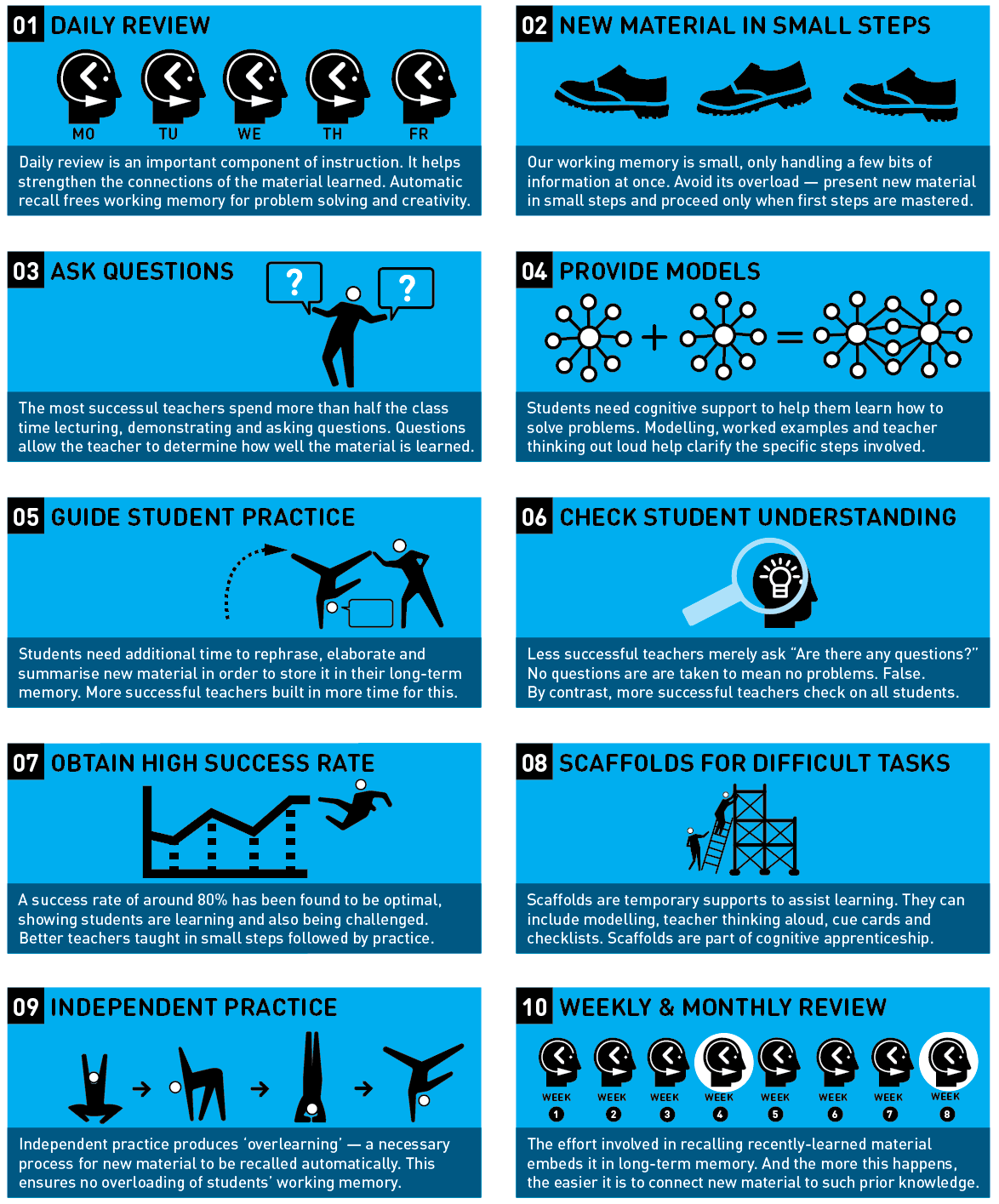 Learning is supported through regular review, helping pupils to strengthen recall and free up working memory. Questioning is used purposefully to check understanding and deepen thinking. Knowledge is carefully sequenced, allowing concepts to build progressively over time, and pupils move through clearly defined stages of practice, from guided support to increasing independence. This approach ensures learning is secure, cumulative and designed to lead to long-term retention.
In our foundation subjects, including science, geography and history, the curriculum is built around carefully defined Big Ideas for each subject, supported by key concepts that thread coherently throughout the academy. Knowledge organisers are used to make essential subject knowledge explicit and accessible for pupils and teachers alike. Learning is mapped across structured 13‑week blocks, allowing knowledge and understanding to build over time. Each unit concludes with a Four Quadrant Review and an end-of-unit assessment, ensuring learning is purposeful and secure. Knowledge is kept under constant review, supporting pupils to move key knowledge and skills from working memory into long-term memory.
How Learning Happens
Our teaching is based on a clear understanding of how children learn. Learning begins when pupils focus their attention on key information, as we know that attention is selective and what is not attended to cannot be learned. Carefully designed lessons help direct pupils’ attention to the most important knowledge.
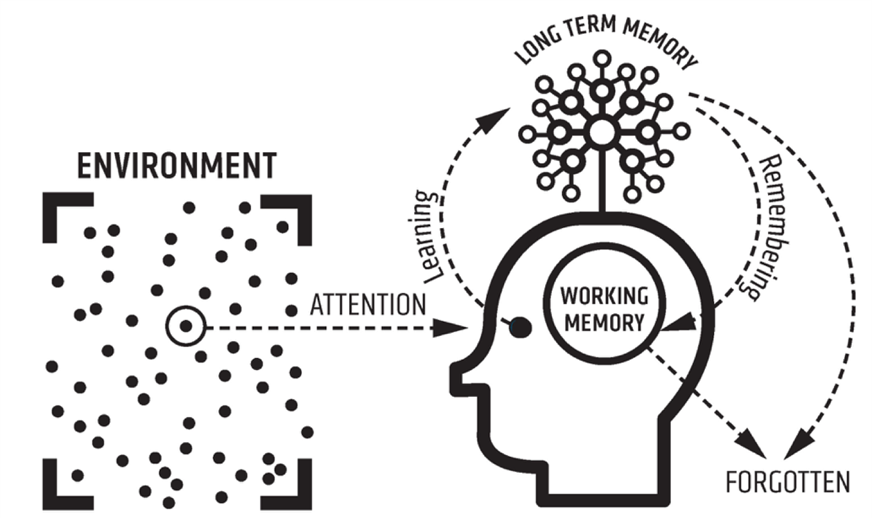
This information is then held in working memory, where thinking and understanding take place. As working memory is limited, learning is broken into small, manageable steps to avoid cognitive overload. Through rehearsal, discussion and making links to prior learning, knowledge can move into long-term memory, where it is stored securely and connected to existing understanding.
Regular retrieval practice brings knowledge back into working memory, strengthening recall and deepening understanding. Without rehearsal or review, information fades and is forgotten. This is why revisiting and retrieval are built into our foundation subject curriculum, helping pupils retain learning over time.